
What Is a Macerated Oil? A Chemist’s Guide to Herbal Infusions
Have you ever wondered how a plant like calendula makes its way into a body oil?
One traditional way is through maceration: soaking plant material in a carrier oil so some of the plant’s oil-soluble components move into the oil. You may also hear this called an herbal oil infusion.
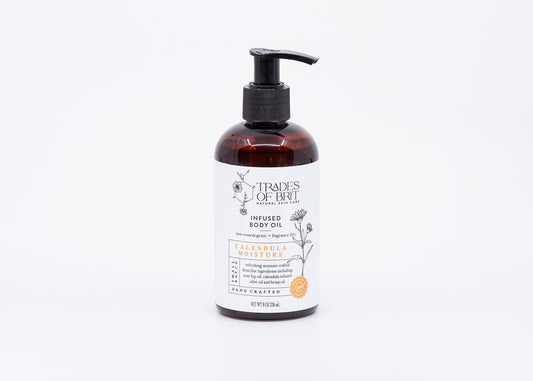
At Trades of Brit, calendula-infused olive oil is part of our Calendula Body Oil. It has no essential oils added, but the infused olive oil can still have a light, naturally occurring scent. “Fragrance-free” doesn’t always mean completely odorless.
The basics of an oil infusion
Every infusion depends on the plant material, carrier oil, processing method, and storage. Here’s the general idea:
-
Choose a carrier oil. Olive, jojoba, and apricot oils are examples of liquid oils used in skincare formulations. Each has its own feel and characteristics.
-
Choose the botanical. For an oil infusion, the plant material needs to be thoroughly dried. Fresh plant material can introduce water, which may affect the quality and safety of the finished oil.
-
Combine the botanical and oil using clean, dry equipment. Keep water out of the mixture and use a clean, completely dry container.
-
Allow time for the infusion. Some methods use time at room temperature; others use carefully controlled, gentle heat. The right process depends on the ingredients and intended use.
-
Strain and package. Remove the plant material with clean equipment, then transfer the oil into a clean, dry container. Label it with the ingredients and date, and protect it from excess heat and light.
These steps describe the concept, not a tested formula or a guarantee of safety. A home infusion can vary from batch to batch, and a method used for culinary oils doesn’t automatically establish that an oil is suitable for cosmetic use. For example, Penn State Extension’s infused-oil guidance is specifically about food preparation.
Why use dried plant material?
Water and oil don’t mix. When fresh plant material carries moisture into an oil, it can affect the finished infusion. Starting with dried material helps limit added moisture, but it does not by itself establish a product’s safety or shelf life.
For cosmetics, product safety and shelf life depend on the full formula, how it’s made, its packaging, storage, and use. The FDA notes that manufacturers are responsible for determining a cosmetic product’s shelf life and ensuring its safety. Read more in the FDA’s guide to cosmetic shelf life.
Why does an unscented infused oil have a scent?
A formula can have a subtle scent from its base oils or botanical ingredients, even when no essential oils or added fragrance are included. Calendula-infused olive oil may have a light scent of its own. That’s different from intentionally scenting a product with essential oils.
At Trades of Brit, we make both fragrance-free products and products scented with essential oils. When scent is part of a formula, I consider how the blend works in the finished product.
Herbal and Botanical Products in the Trades of Brit Collection
Macerated oils are one way to incorporate botanicals into a formula. Some of our products feature infused oils, while others use botanical extracts or botanical ingredients in a balm or oil blend. Each formula is different, but they all reflect my interest in working with plants thoughtfully.
-
Sonoran Rain Salve — A botanical salve made with an olive-oil base and a blend of herbal ingredients.
-
Calendula Body Salve — Combines calendula, plantain, and burdock botanicals in a rich salve formula.
-
Warming Muscle Rub — Brings botanical ingredients together in an oil-and-beeswax base.
-
Calendula Body Oil — Features calendula-infused olive oil blended with other carrier oils.
-
Daily Body Balm — A rich balm featuring calendula, lemon balm, cleavers, plantain, and dandelion alongside butters and oils.
-
Conditioning Hair Oil — A botanical oil blend featuring argan, rosemary, peppermint, and jojoba oils. Its listed ingredients don’t identify it as a macerated oil, but it’s another way we work with botanical oils.
The ingredient lists and product details are on each page, so you can explore what’s in a formula and choose what suits your routine.
A note from the formulator
Maceration is one way to work with botanicals, but the process is only one part of making a finished skincare product. Ingredient selection, the feel of the formula, clean production, packaging, and product testing all matter, too.
That’s the science and care I bring to Trades of Brit: thoughtful ingredients, intentional formulas, and skincare information you can understand.
Curious about calendula in your routine? Explore the Calendula Body Oil.