
Hard Water and Dry Skin: How to Build a Skincare Routine for Arizona's Desert Climate
By Trades of Brit | Skincare Education | 6-minute read
Have you ever stepped out of the shower, dried off, and noticed that your skin feels tight, dry, or uncomfortable? You may blame your body wash, your moisturizer, or the dry Arizona air. But there's another factor worth understanding: your water chemistry.
If you live in Phoenix or elsewhere in the Southwest, you've probably heard about hard water. Hard water is common in many parts of Arizona, and its mineral content can influence how soap behaves during bathing. Research also suggests that hard water may contribute to skin-barrier irritation under certain circumstances.
The good news? You can build a thoughtful skincare routine that helps keep your skin soft, comfortable, and moisturized.
At Trades of Brit, we believe skincare education should begin with understanding the science behind your skin. Let's explore what hard water is, how it interacts with your skin, and what you can do to care for dry skin in the desert.
What Is Hard Water?
Water is an excellent solvent, which means it can dissolve many substances as it moves through the environment. As water travels through soil and rock, it can pick up dissolved minerals, including calcium and magnesium.
Water containing relatively high concentrations of these minerals is called hard water. Water with lower concentrations is called soft water.
The primary contributors to water hardness are calcium ions (Ca^2+) and magnesium ions (Mg^2+)
Although hard water is not inherently unsafe to drink or bathe in, its mineral content can affect cleaning performance, plumbing, appliances, and how traditional soap behaves.
Hard Water vs. Soft Water
Hard water
-
Contains relatively high concentrations of calcium and magnesium.
-
Can react with traditional soap to form insoluble deposits.
-
May contribute to soap scum and mineral buildup.
-
Can make it more difficult to produce a rich lather with traditional soap.
Soft water
-
Contains relatively low concentrations of calcium and magnesium.
-
Allows traditional soap to lather more readily.
-
Generally produces less soap scum.
-
May feel different on the skin because soap rinses and behaves differently.
One important distinction: naturally soft water and water softened with an ion-exchange system are not exactly the same. A conventional water softener reduces calcium and magnesium by exchanging them for sodium or potassium ions.
The Chemistry of Hard Water: Why Does Soap Scum Form?
Let's put on our chemist hats for a moment.
Traditional soap consists of fatty acid salts. One example is sodium stearate, which has a long, water-repelling hydrocarbon chain and an ionic, water-attracting carboxylate head.
When traditional soap encounters calcium ions in hard water, a chemical reaction can produce calcium stearate, a compound that is poorly soluble in water.
In everyday terms, some of the soap reacts with minerals in the water instead of remaining available to cleanse. The resulting deposits contribute to soap scum, and you may notice that your soap does not lather as easily.
This is one reason why understanding your water matters when choosing cleansing products.
A chemistry note: Not all cleansing products behave like traditional soap. Many modern synthetic detergents, often called syndets, are formulated to work effectively in hard water and are less prone to forming insoluble calcium and magnesium salts.
Can Hard Water Make Your Skin Dry?
The answer requires a little nuance.
Your skin's outermost layer, the stratum corneum, acts as a protective barrier. It helps limit water loss and protects against environmental irritants. This layer contains skin cells surrounded by lipids, including ceramides, cholesterol, and fatty acids.
When the skin barrier is functioning well, it helps maintain hydration and keeps the skin feeling comfortable. When the barrier is disrupted, skin may become dry, tight, flaky, or more susceptible to irritation.
Hard water may play a role in this process, depending on your cleanser, exposure, and individual skin sensitivity.
1. Hard water can affect cleansing
Calcium and magnesium can interact with traditional soap and certain cleansing ingredients. This can change how a cleanser lathers, rinses, and leaves deposits behind.
2. Hard water may affect cleanser residue
Research published in the Journal of Investigative Dermatology in 2018 found that hard water increased sodium lauryl sulfate residue on the skin under the study conditions. The findings linked this increased residue with skin-barrier impairment and irritation.
This is particularly relevant when discussing people who are prone to skin sensitivity.
However, hard water does not automatically cause dry skin or eczema. Skin health is influenced by many factors, including genetics, climate, bathing habits, cleansers, and existing skin conditions.
3. Your environment matters, too
In Arizona, low humidity can contribute to increased water loss from the skin. Indoor heating, air conditioning, hot showers, and harsh cleansing products may add to the problem.
Hard water is only one possible piece of the puzzle. A useful skincare routine addresses the skin barrier and environmental conditions rather than assuming that one factor explains every symptom.
How to Build a Skincare Routine for Hard Water and Dry Skin
You do not necessarily need an entirely new skincare collection. Start with a few practical adjustments.
Step 1: Keep your shower warm, not hot
Long, hot showers may remove some of the lipids that help support your skin barrier.
Aim for a short shower, around five to ten minutes, using comfortably warm water. Pay attention to how your skin feels afterward.
If your skin consistently feels tight after bathing, consider whether the water temperature, cleanser, or length of your shower may be contributing.
Step 2: Choose a gentle cleanser
If you use traditional bar soap and notice persistent tightness or dryness, consider trying a gentle, fragrance-free cleanser formulated for dry or sensitive skin.
Look for products that cleanse without leaving your skin feeling stripped. A rich lather is not a reliable measure of how gentle or effective a cleanser is.
If you enjoy handmade soap, remember that its performance depends on its formulation and the water in which it is used. You do not automatically have to stop using bar soap, but you may need to adjust your choice based on how your skin responds.
Step 3: Pat your skin dry
After bathing, gently pat your skin with a clean towel rather than rubbing vigorously.
Leave your skin slightly damp. This creates a useful opportunity to apply a moisturizer before the remaining surface water evaporates.
Step 4: Apply a body cream while your skin is damp
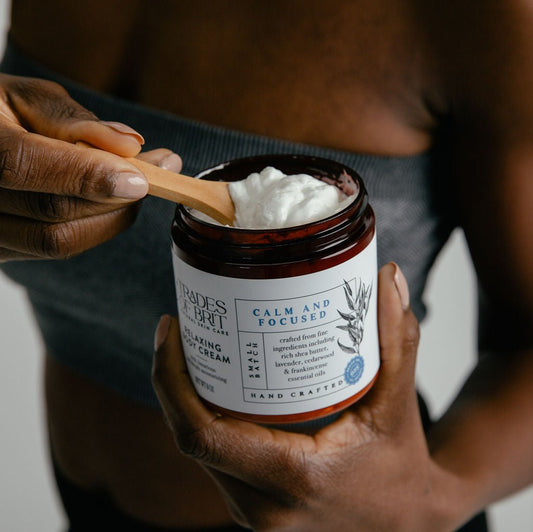
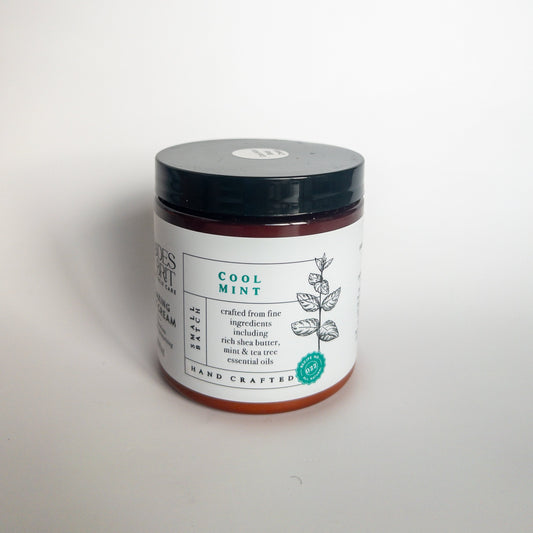
A well-formulated body cream can provide both water and emollient ingredients that help soften skin and support its moisture barrier.
Humectants, such as glycerin, attract and retain water. Emollients help smooth the skin, while occlusive ingredients help reduce water loss.
These ingredient categories have different functions, which is why the overall formulation matters more than any single ingredient.
At Trades of Brit, our approach combines botanical ingredients with formulation science to create body care products designed with dry skin in mind.
Step 5: Layer body oil or salve when you need extra moisture support
Body oils and anhydrous salves can complement a moisturizing routine.
-
Body oil: Helps soften skin, improves skin feel, and can reduce moisture loss by providing an emollient layer.
-
Salve: Typically combines oils, butters, and waxes to create a richer, more protective-feeling product.
-
Body cream: Combines water and oil-phase ingredients in an emulsion, often providing a balance of hydration and emollience.
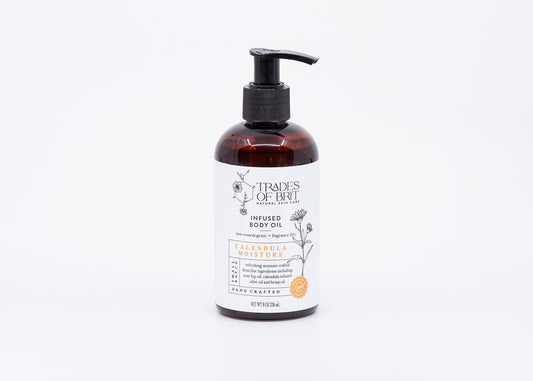
For example, you could apply a body cream after bathing and follow with a small amount of Calendula Body Oil on areas that feel especially dry.
Alternatively, a salve can be applied to particularly dry areas as needed.
Remember that oils and salves do not add water to the skin in the same way a water-containing moisturizer does. Their role is primarily to soften the skin and help reduce moisture loss.
Do You Need a Water Softener?
Not necessarily.
A water softener may be worth considering if you have significant mineral buildup, persistent soap scum, or other household concerns related to hard water.
However, installing a water softener is not a guaranteed treatment for dry skin or eczema. Research on whether softening household water improves eczema symptoms has not established a consistent benefit.
If you are curious about your home's water hardness, you can review your local water utility's water quality information or use a water-hardness test kit.
A shower filter is not automatically a water softener. Many shower filters target specific substances, and their ability to remove calcium and magnesium depends on the technology used.
For residents of Phoenix, the city's official water quality reports are a useful starting point. Keep in mind that hardness can vary by water source and service area.
Does Natural Skincare Work Better With Hard Water?
Not automatically.
Natural ingredients can offer useful emollient, humectant, or other skin-conditioning properties, but the word naturaldoes not guarantee that a product will be effective, gentle, or suitable for every person.
The complete formulation matters.
A formulator must consider ingredient compatibility, concentration, stability, product texture, intended use, and appropriate preservation when the formula contains water.
For example, a body cream and an oil-based salve have different formulation requirements because they contain different types of ingredients and have different physical properties.
This is where chemistry and botanical knowledge work together.
At Trades of Brit, our philosophy is simple: Rooted in Science. Powered by Plants. Gentle for All.
We believe customers deserve to understand what they put on their skin and why the formulation choices matter.
When Should You Seek Professional Advice?
Dry skin is common, but persistent symptoms deserve attention.
If your skin remains very itchy, becomes painful, cracks, bleeds, develops a persistent rash, or does not improve with gentle cleansing and moisturizing, consult a qualified healthcare professional or dermatologist.
People with eczema or other diagnosed skin conditions may need individualized care beyond a general body care routine.
A cosmetic product can support everyday skin conditioning, but it should not be presented as a cure for eczema or as a replacement for prescribed treatment.
Final Thoughts: Understand Your Water, Support Your Skin
Hard water contains dissolved minerals that can interfere with traditional soap and contribute to mineral deposits. Research also suggests that hard water may influence skin-barrier irritation in certain circumstances.
But your water is only one part of your skin's story.
Shorter, warm showers, gentle cleansing, and consistent moisturizing can help support comfortable skin, especially in a dry climate like Arizona.
And remember: your skin does not need a complicated routine to receive thoughtful care. It needs products that suit its needs, ingredients that serve a purpose, and a little consistency.
At Trades of Brit, we are here to make skincare science easier to understand—one ingredient, one formula, and one routine at a time.
Ready to build your desert skincare routine? Explore Trades of Brit's body creams, Calendula Body Oil, and Sonoran Rain Salve to discover options for your daily moisturizing ritual.
Rooted in Science. Powered by Plants. Gentle for All.
References and Further Reading
-
American Academy of Dermatology Association. Guidance on bathing and moisturizing for dry skin: https://www.aad.org/public/everyday-care/skin-care-basics/dry/bath-or-shower
-
Danby SG, Brown K, Wigley AM, et al. “The Effect of Hard Water on Atopic Eczema: A Pilot Study.” Journal of Investigative Dermatology (2018). Research on water hardness, cleanser residue, and skin-barrier effects.
-
National Eczema Society. Information and guidance on washing, bathing, and eczema: https://eczema.org/
Educational disclaimer: This article provides general skincare information and is not intended to diagnose, treat, or cure a medical condition. Individual results and sensitivities vary.